
Introduction
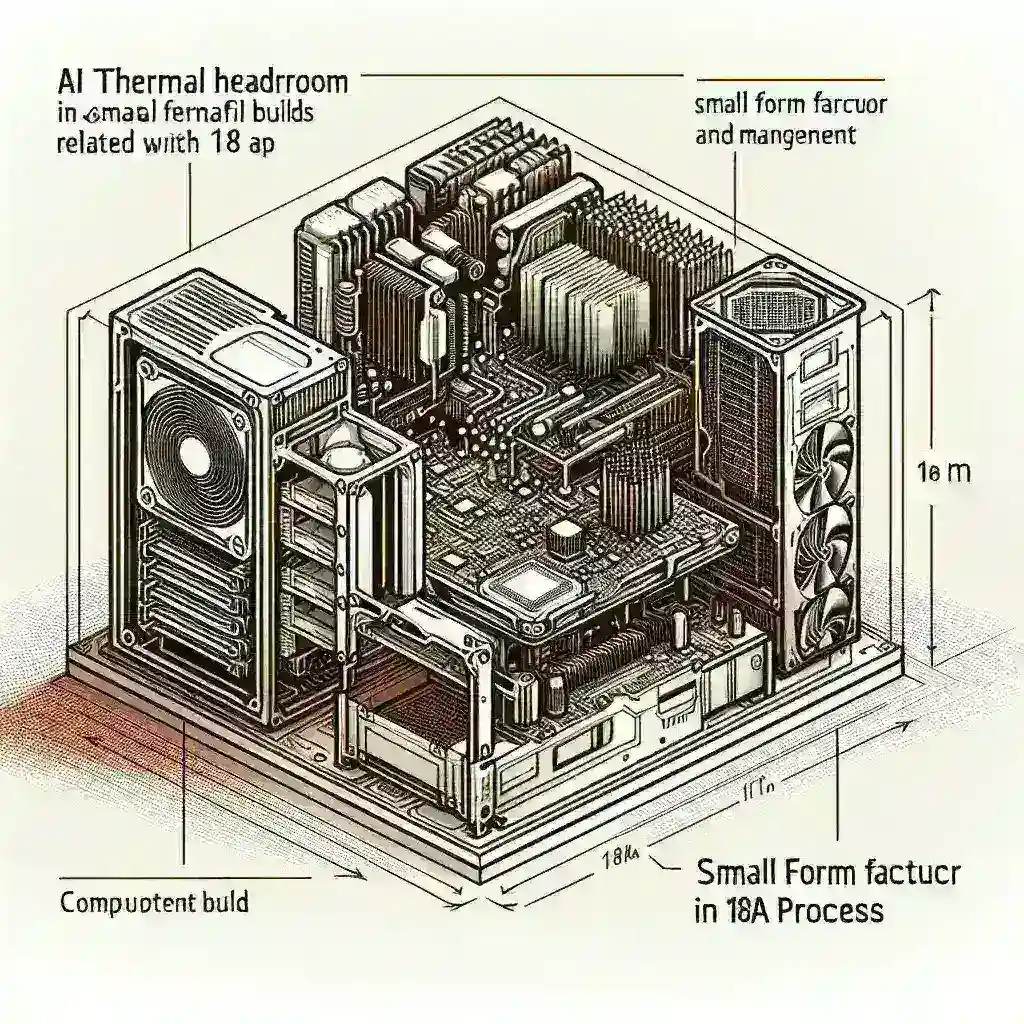
In the rapidly evolving world of technology, the demand for efficient thermal management systems is at an all-time high, especially in small form factor builds designed for artificial intelligence (AI) applications. The 18A process has emerged as a crucial technique in fulfilling these demands. This article will delve into what the 18A process delivers for AI thermal headroom, particularly in compact architectures.
Understanding the 18A Process
The 18A process refers to a cutting-edge fabrication technology utilized in semiconductor manufacturing. This process is characterized by its ability to produce smaller, more efficient transistors that operate at lower voltages. The primary goal is to enhance performance while minimizing power consumption, which is essential for devices deploying AI algorithms that require significant processing power.
Key Features of the 18A Process
- High Density: The 18A process allows for a higher integration density of components, making it ideal for small form factor designs.
- Improved Thermal Performance: With reduced power consumption, less heat is generated, thus improving thermal headroom.
- Advanced Material Usage: Employing new materials that facilitate better heat dissipation and lower thermal resistance.
- Simplified Manufacturing: Streamlined processes lead to improved yields and cost-effectiveness.
Thermal Headroom Explained
Thermal headroom is a term used to describe the allowable temperature range within which a device can operate without overheating. For AI applications, maintaining adequate thermal headroom is critical, as these systems often execute complex calculations that generate significant heat. The 18A process plays a vital role in preserving thermal headroom by ensuring that devices can manage heat efficiently.
Importance of Thermal Management in AI
Effective thermal management is essential for several reasons:
- Reliability: Overheating can lead to hardware failures and reduced lifespan of components.
- Performance: High temperatures can throttle performance, negating the benefits of advanced AI algorithms.
- Energy Efficiency: Lower temperatures correlate with reduced energy consumption, contributing to sustainability efforts.
Advantages of the 18A Process in Small Form Factor Builds
Compact Designs
As devices become smaller, the challenge of thermal management becomes more pronounced. The 18A process addresses this challenge by enabling:
- Miniaturization: Smaller transistors allow for more compact designs, essential for portable AI devices.
- Enhanced Performance: Higher speeds and efficiencies deliver better performance without the size increase.
- Lower Power Requirements: Reduced power consumption translates to less heat generation, improving overall thermal management.
Real-World Applications
The application of the 18A process in small form factor builds is evident in various sectors:
- Smartphones: AI processes in smartphones benefit from the reduced heat output, improving battery life and user experience.
- Wearables: Devices like smartwatches leverage the 18A process for performance while maintaining comfort and portability.
- IoT Devices: AI-enabled IoT devices utilize the thermal advantages of the 18A process for efficient operation in compact packages.
Future Implications of the 18A Process
As technology progresses, the implications of the 18A process will likely expand:
- Continued Miniaturization: We can expect further innovations that lead to even more compact and efficient AI devices.
- Integration of AI in New Domains: The 18A process may enable AI applications in areas previously considered impractical due to thermal constraints.
- Sustainability Advances: Enhanced thermal management could contribute to greener technologies by reducing energy consumption.
Expert Insights
Industry experts highlight the significance of the 18A process, stating that it is paving the way for a new generation of AI applications that can operate effectively in confined spaces. According to leading semiconductor engineers, “The ability to manage heat efficiently while maximizing performance is crucial in today’s tech landscape, especially for AI applications that are becoming ubiquitous in our daily lives.”
Conclusion
The 18A process represents a significant leap forward in semiconductor technology, particularly for AI applications housed in small form factor builds. By enhancing thermal management capabilities, this process allows for improved performance, reliability, and energy efficiency. As we move towards a more AI-driven future, understanding and leveraging these advancements will be paramount for designers and engineers alike.